Career paths / 7 min read
Construction career paths: from first exposure to ownership.
The construction career path is not one ladder. It is a set of connected routes through craft training, technical education, field leadership, project management, and business leadership.
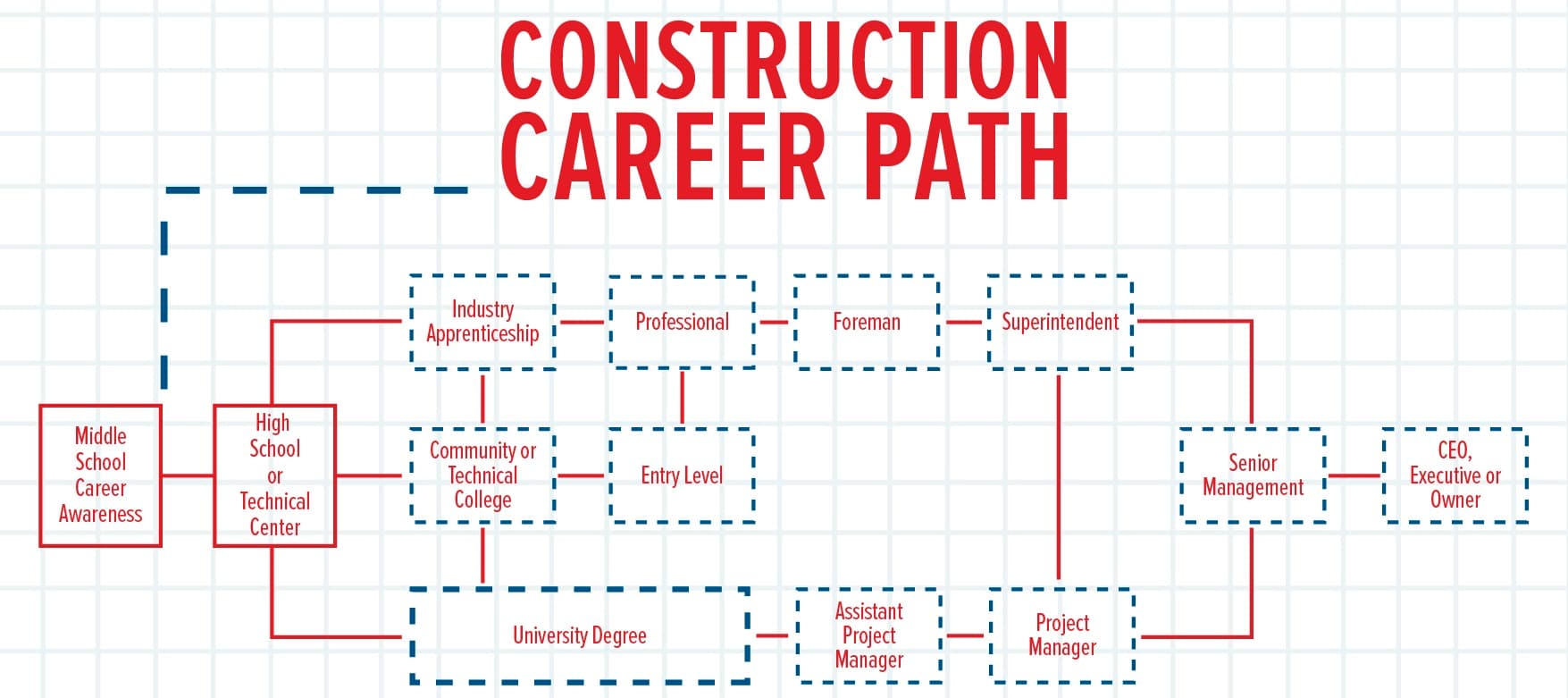
The career map is a set of bridges, not a straight line.
A future superintendent does not have to start in the same place as a future project manager. Some leaders enter through a trade apprenticeship. Others start with technical college, construction management school, military construction, safety, estimating, scheduling, or an entry-level operations role.
The important pattern is progression. Every move should add a larger scope of responsibility: more people, more schedule pressure, more budget exposure, more client communication, or a more complex jobsite.
Four common lanes for construction leaders
Craft and field leadership
Apprenticeship, trade experience, and field performance can lead into lead person, foreman, general foreman, and superintendent roles.
Professional and technical roles
Technical college, estimating, safety, BIM, scheduling, and quality roles can build the project knowledge needed for broader responsibility.
Project management
Project engineer and assistant project manager jobs often become the proving ground for cost control, coordination, client communication, and schedule ownership.
Executive and ownership track
Superintendent, project manager, and senior management experience can compound into operations leadership, executive roles, or ownership.
What moves someone to the next box?
- Documented project scope. Track project type, contract value, crew size, schedule pressure, delivery method, safety exposure, and the problems you owned.
- Communication reps. The jump from craft to foreman, or project engineer to APM, depends on how well you coordinate people who do not report directly to you.
- Budget and schedule exposure. Leaders who understand cost, sequencing, procurement, change orders, and risk are easier to trust with larger work.
- Mentorship and timing. Many moves happen because a superintendent, PM, executive, or owner gives someone the next stretch assignment before the resume looks perfect.
How employers can use this map
Hiring teams can use a career-path map to write better job posts. Instead of only listing years of experience, describe the bridge the role creates: foreman to superintendent, project engineer to assistant PM, superintendent to senior superintendent, or PM to operations leadership.
Candidates can use the same map to explain where they are headed. A strong profile does not just list past job titles. It shows the kind of responsibility the person is ready to carry next.